
Share William "Warren" Corman's obituary with others.
Invite friends and family to read the obituary and add memories.
Stay updated
We'll notify you when service details or new memories are added.
You're now following this obituary
We'll email you when there are updates.
Select your format and elements to print

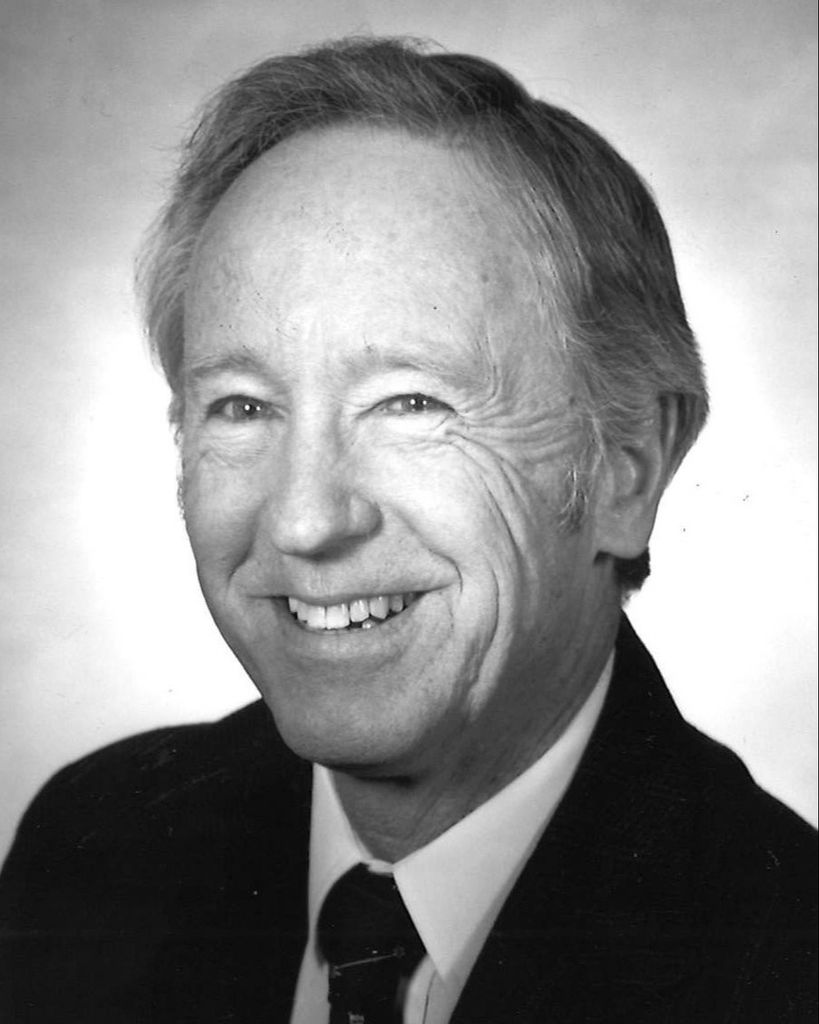
William "Warren" Corman
Jul 31, 1926 — Aug 28, 2025
Share William "Warren" Corman's obituary with others.
Invite friends and family to read the obituary and add memories.
Stay updated
We'll notify you when service details or new memories are added.
You're now following this obituary
We'll email you when there are updates.
Select your format and elements to print



William "Warren" Corman
Warren Corman, age 99, died in Lawrence, KS on August 28th, 2025. He will be buried in Pioneer Cemetery on the campus of the University of Kansas. A celebration of life will be held 2:00 PM, Wednesday, September 17, 2025, at First Presbyterian Church in Lawrence. Corman was born on July 31, 1926, to Emmett J. Corman and Miriam E. Twineham Corman in Kansas City, KS. He attended Maccachaque Grade School at Olathe and Rainbow Boulevard in Kansas City and Oak Grove Grade School in the county west of Argentine, KS. His parents then moved to Topeka in 1939 where he graduated as Salutatorian of Washburn Rural High School in June of 1944. His father designed this school.
Corman enlisted at age 17 in the Navy Air Corps and undertook flight training at both Jacksonville and Memphis Naval Air Stations in 1944. Before receiving their pilot’s wings his group of young sailors were transferred to Port Hueneme, CA, the home base of the Navy Seabees. The navy had more pilots than they needed and really were short of Navy Construction Battalion personnel (Seabees). Corman trained there with the US Marines for beach assaults, fighting the enemy and backing up the Marines with necessary construction projects. While in training at Port Hueneme his father died in Topeka at age 47 leaving his mother and a younger brother, Emmett Gary Corman, at home.
In February 1945 the Seabees and the Marines boarded the USS Crittendon at Treasure Island in San Francisco bay and sailed out to sea under the Golden Gate bridge. The ship was a large troop ship and was nicknamed the “Galloping Ghost” because of waging so many battles in the Pacific without being sunk. The convoy to the South Pacific was slow as it zig-zagged south and westerly at eight knots, being held to that speed by the large contingent of Landing Ship Tanks (LST) in the convoy. The convoy joined hundreds of other ships attacking an island unknown to most in the Ryuku Island group south of Japan- the island of OKINAWA. The US Navy lost more ships and personnel in this assault than ever before in history, mainly due to the Kamakazi plane attacks. After a terrific land and sea battle the island was secured by US and Allied forces in July 1945. We suffered 50,000 casualties including 12,000 dead. The battle plan then was to take the attack to the mainland of Japan in November 1945 with about one million US troops. Predictions were that we would lose about one-half of our personnel in the assault on the Japanese mainland.
Early in August of 1945 the US Airforce dropped two atomic bombs on Japan and the Japanese surrendered.
Corman stayed on OKINAWA under the command of the Marines in a Military Government position to help put the island back into a habitable condition for the natives. Corman returned home to Topeka on Mother’s Day of 1946 at age 19 and enrolled in the School of Engineering and Architecture at KU with the help of the GI Bill.
Corman graduated in architectural engineering in June 1950 while working in the state architect’s office in Topeka from 1947 on. He married Juanita Finson in November 1947, and they subsequently had four children, Becky, Cathy, David and Nancy. He worked full time for the state architect from June 1950 to June 1957 helping design projects for the state universities. Several projects included Allen Fieldhouse, Ahearn Fieldhouse and the original Student Union in Manhattan, Cram Science Hall in Emporia and an addition to the Student Union in Hays. He took a year’s leave in 1955 to work with the Santa Fe Railroad to design a new passenger depot for Lawrence, KS.
After graduating from KU in 1950 Corman decided to design and build his own home in Topeka. It was to be extremely energy efficient. He borrowed $10,000 and finished it in 8 months by working nights and weekends. It cost a total of $9,000. It was so energy tight that it was difficult to find a gas furnace small enough to fit the heat loss. A typical heating bill for the entire winter was less than $25.
In 1957 Corman moved to Newark, DE to work for a year for the DuPont architect’s office and a year designing a new elementary school at New Castle, DE. In 1960 Corman and family moved back to Topeka to join with the Tom Williamson Firm. This later became the Williamson-Corman architectural firm. Corman designed a new Camp at Council Grove Reservoir for 120 Congregational churches in the Midwest. He also designed a new Washburn Rural High School southwest of Topeka and a new Seaman Congregational Church in north Topeka. Other projects with Williamson-Corman included three large Capeheart Housing projects in Topeka, Madison, WI and Warrensburg, MO for the US Airforce and the Lake Sherwood lake and housing development west of Topeka.
In 1963 Corman joined the firm of Howells-Hale-Corman in Topeka and was a partner there until taking the job offered by the Kansas Board of Regents in September 1966 as the first architect (Director of Facilities) for the state universities. Corman was licensed in Kansas as both a registered architect and a licensed professional engineer. He worked for the Regents for 31 years with many Regents, campus leaders, governors, state budget directors and a myriad of legislators. He helped organize and re-organize many state laws pertaining to budgeting, funding, designing and building of state projects. His largest and most well known project was “Crumbling Classrooms”, a $170 million authorization to help each campus with improvements in classrooms, research labs, disability features and fire improvements. Governor Bill Graves was a close ally and great supporter of this endeavor.
In June 1979 Corman married Mary E. Britain of Lawrence. Britain was widowed and the mother of two teenagers, Traci and Bill. She was the Director of Medical Records at The University of Kansas Medical Center in Kansas City having graduated Phi Beta Kappa earlier at KU. Corman and Britain were married in the First Presbyterian Church in Lawrence.
Corman worked for the Kansas Board of Regents until January 1997. As the first Director of Facilities he worked closely with all of the state universities to develop documents describing needs for new or improved classrooms and laboratories. These documents included appraisals of need for space and for improving the quality of space. State laws were changed on how professional architects and engineers were selected and hired for state projects. He also participated in over 4,500 interview sessions during those 31 years in hiring qualified firms. In 1970 Corman led the effort statewide to develop long-range master plans for each of the universities.
In January 1997 Chancellor Robert Hemenway asked Corman to join his staff in the chancellor’s office as University Architect and Special Assistant to the Chancellor. Corman worked in this position for 13 years and retired in December of 2010 at age 84. Several projects that Corman was most proud of helping with here: Dole Institute of Politics, Hall Center for Humanities, Multidisciplinary Research Building (MR. B), Korean War Memorial, Booth Family Hall of Athletics, growth of the Kansas Law Enforcement Training Center in Yoder, KS, growth of the Edwards Campus in Overland Park and the Anderson Family Football Facility next to the stadium.
Corman was a member of Downtown Topeka Rotary Club for 36 years, president of it in 1972-73 and was a Paul Harris Fellow of Rotary International. He was a member of the national Association of University Architects from 1971 until his death, was president in 1987 and was elected to the AUA national Distinguished Service Award. He was awarded the Distinguished Alumnus of the year in 1999 by the School of Architecture at KU and Distinguished Service Award of the year in 2004 by the School of Engineering at KU. That year he was also elected to the Hall of Fame for Washburn Rural High School. In 2009 Kansas Athletics, Inc. awarded Corman the Lifetime Service Award with a large, framed basketball jersey labeled “CORMAN #1” at a half time ceremony in Allen Fieldhouse.
Corman served on numerous boards: Board of Elders for First Presbyterian Church, School of Architecture advisory board, School of Engineering advisory board, chairman of buildings and ground committee of Brewster Retirement Place in Topeka, chair of the Presbyterian Manors of Mid-America in Wichita, KU Wounded Warriors executive board, president of Quail Pointe at Alvamar neighborhood association and the KU Alumni Anniversary board. After retiring from the chancellor’s office in 2010 he led many campus bus tours for the Alumni Association to describe the history of the building program from 1865 to present with stories about each building. He also developed a lecture series on the history of KU building and presented it on several occasions, one of which was a three-week series for the Osher Institute of KU Continuing Education.
In 1993 Corman Served as Interim Executive Director for the Kansas Board of Regents. He also served as Scoutmaster of Troop 45 in Topeka when he returned home from WWII and enjoyed the overnight camping.
Corman enjoyed the challenges of architecture. He estimated that he worked on almost four billion dollars of projects in his 66-year career. He never forgot the Seabee motto from WWII: CAN DO, WE FIGHT, WE BUILD. The motto was followed by: “The difficult we do immediately, the impossible may take several days”.
After retirement from KU in 2010 he was asked to assist the Office of the Dean of Engineering at KU with a new project – the LEEP 2 classroom/research laboratory facility with a project cost of $80 million. He worked closely with the Dean’s office, the Design and Construction Management office at KU, the private architectural firm and the General contractor for the project. The project was completed in August of 2015 on schedule and on budget. Corman was 89.
The Corman family enjoyed great family reunions in the Rocky Mountains in Colorado. At first there were only about 15 total members but as the children grew and married the family grew to around 42 members including the six children, spouses, grandchildren and great-grandchildren. Estes Park was a favorite location with several large lodges, horseback riding, a commercial kitchen with dining space for 50 and the National Park for hiking.
Corman was recognized in 2022 at half time at a home basketball game as the last living architect on the team that designed Allen Field House in 1952. He was also awarded the Fred Ellsworth Medallion by the KU Alumni Association for a lifetime of service to the University of Kansas. In November 2022 Corman was the Grand Marshal of the annual Lawrence Veteran’s Day parade.
Corman is survived by his wife Mary Britain Corman and six children: Becky Lynn Campbell (Topeka), Cathy Ann Denny (Topeka), David Warren Corman and wife Amy (Gilbert AZ), Nancy Sue Cameron and husband Stan (Wasilla AK), Traci Lyn Miller and husband Ken (Topeka) and William Bradley Britain and wife Lynn (Alpharetta, GA) along with some twenty grandchildren, ten great grandchildren and several great great grandchildren.
Corman was preceded in death by his parents and his younger brother Gary of Livermore, CA.
Service Schedule
Past Services
Burial
Wednesday, September 17, 2025
12:00 - 1:00 am (Central time)
Pioneer Cemetery
Celebration of Life
Wednesday, September 17, 2025
Starts at 2:00 pm (Central time)
First Presbyterian Church
Guestbook
Visits: 1200
This site is protected by reCAPTCHA and the
Google Privacy Policy and Terms of Service apply.
Service map data © OpenStreetMap contributors